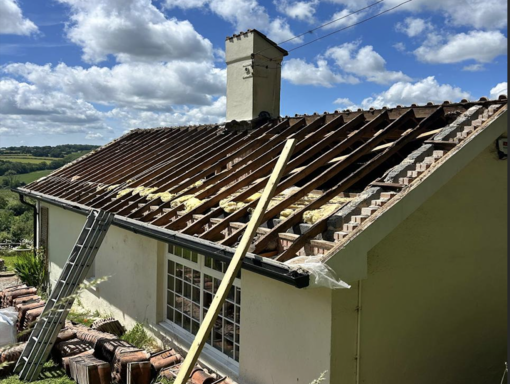
Understanding How Localised Roof Damage Can Become a Wider Problem
Roof damage often begins with a relatively small defect, such as a cracked tile, loose section of flashing or failed roof joint. Although the original fault may appear isolated, water, wind and continued material movement can allow the damage to spread into surrounding areas.
For property owners in Costessey, Norfolk, recognising this progression is important. Prompt professional attention can help contain a defect before it affects the underlay, battens, insulation, roof timbers or internal finishes.
Water Can Travel Away From the Entry Point
The location of an internal damp patch does not always reveal where rain is entering the roof. Once water passes beneath the external covering, it may travel along the underlay, battens or structural timbers before reaching a ceiling.
This can make a localised defect appear to affect several areas. It can also lead to an incorrect repair if only the visible symptom is considered.
Common entry points include:
- Cracked, broken or missing tiles
- Displaced slates
- Deteriorated lead flashing
- Damaged roof valleys
- Failed joints around vents and pipes
- Loose ridge or hip tiles
- Split or worn flat roof coverings
A professional roof inspection should trace the moisture back towards its likely entry point while checking the route it has taken beneath the covering.
Damaged Tiles Can Affect Surrounding Materials
Roof tiles and slates form an overlapping system. When one piece moves or breaks, the neighbouring materials may become more exposed to wind and rain.
A gap in the covering can allow wind to reach beneath adjacent tiles. Repeated movement may then weaken their fixings or cause them to slip. Water entering through the original gap can also affect the roofing felt, timber battens and fixings below.
Replacing the visibly damaged tile may be sufficient when the surrounding roof remains sound. However, nearby materials should still be checked for movement, moisture and deterioration.
Wind Can Enlarge an Existing Weakness
Strong winds do not need to remove a roof covering completely to cause damage. Air pressure can lift tiles slightly, loosen ridge components or disturb already weakened roof edges.
Once a small opening has formed, later periods of wind may enlarge it. This can create a cycle in which:
- A tile or joint becomes slightly loose
- Wind reaches beneath the exposed edge
- Surrounding materials begin to move
- The opening becomes wider
- Rain reaches a larger section of the roof
Roof edges, ridges, verges and previously repaired areas can be especially vulnerable when their fixings or supporting materials have deteriorated.
Moisture Can Weaken the Roof Structure
Persistent moisture beneath the roof covering can affect more than the visible surface. Timber battens and roof structures depend on remaining suitably dry. If water repeatedly reaches them, they may lose strength or provide less reliable support for the materials above.
Moisture can also affect insulation and internal finishes. Damp insulation may become less effective, while ceilings and walls can develop staining, peeling finishes or musty odours.
The longer water remains undetected, the greater the possibility that a straightforward external defect will require attention across several connected components.
Blocked Drainage Can Spread Water Across the Roof
Roof drainage is designed to move rainwater away efficiently. When gutters, valleys or outlets become blocked, water may collect or flow towards areas that do not normally receive sustained exposure.
Poor drainage can contribute to:
- Water backing up beneath roof edges
- Overflow affecting fascias and soffits
- Debris retaining moisture in roof valleys
- Standing water on flat roof sections
- Damp developing around junctions and outlets
Clearing the blockage may be part of the solution, but any materials affected by repeated overflow should also be inspected.
Failed Flashing Can Affect a Larger Junction
Lead flashing and other weatherproofing details protect the points where the roof meets a chimney, wall or penetration. These areas must accommodate movement while directing water safely over the roof covering.
If flashing lifts, cracks or separates from the adjoining surface, water may enter along the entire junction rather than through one obvious spot. It can then travel beneath several rows of tiles or affect the structure around the opening.
A lasting repair must address the condition of the flashing, its fixings and the materials it connects to.
Previous Repairs May Hide a Wider Cause
A roof problem can return or appear to spread when an earlier repair addressed the visible damage without correcting its underlying cause. For example, replacing one slipped tile may not solve the issue if deteriorated battens or weakened fixings are allowing repeated movement.
Recurring problems may indicate:
- Ageing materials across a broader section
- Movement within the supporting structure
- Water entering from a higher point
- Poor drainage affecting several components
- Incompatible or deteriorated repair materials
- More than one defect contributing to the same leak
Reviewing previous repair areas as part of the wider roof inspection can help identify patterns that isolated work may miss.
Why Early Assessment Matters
Small roof defects are generally easier to contain before moisture and movement affect connected materials. Early assessment allows a roofer to determine whether the problem remains localised or has begun spreading beneath the visible surface.
A thorough inspection may consider the condition of:
- Tiles, slates and roof coverings
- Flashing, valleys and roof junctions
- Ridge, hip and verge details
- Gutters and drainage outlets
- Underlay and battens where accessible
- Roof timbers and insulation
- Previous repair areas
This broader approach helps ensure that the work addresses both the source of the damage and any related deterioration.
Conclusion
Roof damage can spread when water travels beneath the covering, wind enlarges existing openings or persistent moisture weakens supporting materials. Blocked drainage, failed flashing and unresolved defects from earlier repairs can also allow a localised problem to affect a much wider area.
If you have noticed a leak, displaced roof covering or recurring damp in Costessey, Norfolk, Costessey Roofing Services can assess the roof and identify the full extent of the problem. Timely attention can help contain the damage and ensure that the underlying cause is properly addressed.
Call us on: 01362 702 197
Click here to find out more about Costessey Roofing Services
Click here to complete our contact form and see how we can help with your roofing needs.