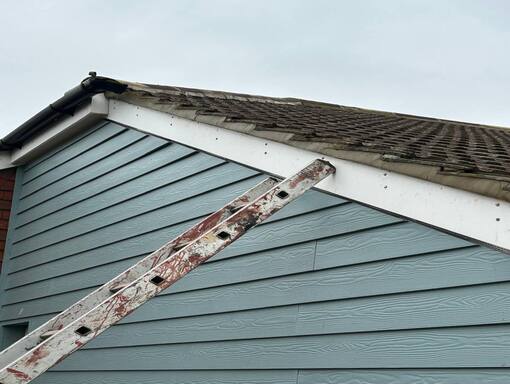
A roof leak can be easy to underestimate when it only appears during rainfall. Once the weather improves and the dripping stops, it may seem as though the immediate problem has disappeared. Unfortunately, a leak stopping when the rain stops does not mean the roofing defect has corrected itself.
In most cases, it simply means that water is no longer entering because the source of the moisture has temporarily gone. The damaged or vulnerable part of the roof may still be present and ready to allow water through during the next period of rainfall.
For homeowners in Costessey, Norfolk, investigating an intermittent roof leak early can help identify the source before repeated water ingress affects a wider area. Costessey Roofing Services can assess the roof, locate likely defects and determine the appropriate repair.
Why Does a Roof Leak Only Appear When It Rains?
Many roof leaks are directly related to rainfall because water needs to reach a particular defect before it can enter the roofing system.
When the rain stops, the flow of new water stops too. Any remaining moisture may gradually drain away or dry, causing the visible leak inside the property to disappear.
However, the opening that allowed the water through can remain unchanged.
Rain-Related Leaks Can Be Associated With:
- Cracked or broken roof tiles
- Slipped or displaced tiles
- Deteriorated flashing
- Vulnerable roof junctions
- Damaged areas around penetrations
- Defective sections of the roof covering
- Problems around ridges or verges
- Localised deterioration beneath the covering
The important task is identifying which part of the roof is responsible rather than assuming the absence of dripping means the problem has ended.
Does a Leak That Has Stopped Still Need Attention?
Yes, a roof leak should generally be investigated even if the visible water has stopped.
A functioning roof should prevent rainfall from entering the property. If water has reached the interior, there is usually a reason for it.
Waiting for another rainy day simply allows the same defect another opportunity to admit water.
Why Intermittent Roof Leaks Can Be Misleading
Not every leak appears during every period of rainfall.
One particular combination of rain and wind may cause water ingress, while lighter or differently directed rainfall may not.
This can make the problem appear unpredictable.
You Might Notice That the Leak:
- Appears only during heavy rain
- Happens when rain is accompanied by strong wind
- Occurs after prolonged rainfall
- Develops some time after the rain begins
- Stops relatively quickly afterwards
- Appears in one location and then disappears completely
These patterns can provide useful clues when investigating the source.
Wind-Driven Rain Can Expose Vulnerable Areas
Rain does not always fall vertically onto a roof.
During windy weather, water can be driven towards roof details from different angles. Small weaknesses that remain unaffected during gentle rainfall may allow water through when conditions become more severe.
This is why homeowners sometimes experience a leak during one spell of bad weather but not during the next.
The underlying vulnerability can still be present even when ordinary rainfall does not expose it.
The Visible Drip May Not Be Directly Below the Roof Defect
One of the difficulties with diagnosing roof leaks is that water can travel after entering the roofing system.
It may run along roofing components or follow another surface before eventually appearing on a ceiling or wall.
As a result, the internal damp patch does not always identify the exact location of the external defect.
This Is Why Accurate Investigation Matters
Simply concentrating on the section of roof immediately above the visible mark can lead to the wrong area being repaired.
An experienced roofer will consider the roof construction, surrounding details and possible routes taken by the water.
What Happens to Water After the Rain Stops?
Some moisture may drain away relatively quickly, but other water can remain within roofing materials or surrounding areas for longer.
The absence of active dripping therefore does not necessarily mean everything is immediately dry.
Repeated wetting can gradually affect materials around the leak, particularly when the source remains unresolved.
A Small Leak Can Indicate a Localised Repairable Problem
Discovering a leak does not automatically mean that the entire roof is failing.
Many roof leaks originate from relatively specific defects.
For example, one damaged tile or a vulnerable section of flashing may allow water into an otherwise serviceable roof.
Local Repairs May Be Appropriate When:
- The defect is confined to one area
- Surrounding roofing remains in good condition
- Only a small number of components are damaged
- The source can be identified clearly
- There is no evidence of widespread deterioration
Professional assessment helps determine whether this is the case.
Why Waiting for the Leak to Become Worse Is Not Helpful
A small intermittent leak can be tempting to ignore because it causes relatively little disruption between periods of rain.
However, roofing defects rarely improve simply through being left alone.
A displaced tile will not normally return to its correct position by itself, and deteriorated flashing does not become more secure because the weather has temporarily dried out.
Addressing the problem while it remains localised can prevent repeated water entry through the same vulnerable area.
Could the Leak Be Coming From a Slipped Tile?
Slipped or displaced tiles are one possible cause of rain-related leaks.
Tiles form part of an overlapping system intended to direct water down the roof. If one moves out of position, an area that should be protected can become exposed.
The resulting leak may only become noticeable when enough rain reaches that section.
Replacing or correctly repositioning the affected tile may resolve the problem if the surrounding roof remains sound, although the reason for the movement should also be considered.
Could Flashing Be Responsible?
Flashing protects vulnerable roof junctions where the roof meets other structures or features.
If it becomes loose, damaged or deteriorated, water may find a route into the roof during rainfall.
Because these areas involve changes in surfaces and angles, the eventual internal leak can sometimes appear away from the original entry point.
Professional inspection can help determine whether flashing or another roof detail is responsible.
Why Repeated Leaks Deserve Particular Attention
If the same area becomes damp every time there is substantial rainfall, that repeated pattern strongly suggests an unresolved problem.
Allowing the area to dry between showers does not repair the defect.
Repeated Water Ingress Can Affect:
- Internal finishes
- Timber around the affected area
- Insulation
- Ceiling materials
- Adjacent roofing components
The longer the entry point remains unresolved, the more opportunity water has to affect surrounding materials.
What If the Leak Has Only Happened Once?
A single incident is still worth taking seriously.
Unusual weather conditions may have exposed a weakness that ordinary rainfall had not previously revealed.
Rather than waiting to see whether water comes through again, an assessment can help determine whether there is a visible roofing defect requiring attention.
Catching a developing issue at this stage can be preferable to discovering it again during prolonged rainfall.
Signs to Look for After the Rain Stops
Once the active dripping has ended, there may still be evidence that helps identify the extent of the problem.
Look Out For:
- Damp patches on ceilings
- Water staining
- Discolouration around walls
- Moisture within the roof space
- Damp insulation
- Musty areas
- Marks that become darker during rainfall
- Repeated staining in the same location
These signs can help establish whether water ingress has occurred more than once.
Avoid Assuming a Dry Ceiling Means the Roof Is Fixed
Once a damp patch dries, it can become much less noticeable.
That change relates to the moisture drying rather than the external roof repairing itself.
If the source remains present, another spell of rain may simply restart the process.
The condition of the roof should therefore determine whether action is required, not whether the ceiling happens to be dry on the day it is inspected.
Why Professional Leak Detection Is Valuable
Roof leaks are not always straightforward to trace.
A professional assessment looks beyond the internal symptom and considers how water could be entering and travelling through the roof.
An Inspection Can Consider:
- The location of the internal water mark.
- The roof area above and around it.
- Tiles or other roof coverings.
- Flashing and junctions.
- Ridges, verges and adjoining details.
- Evidence of previous repairs.
- Signs of wider deterioration.
The objective is to repair the actual source rather than simply respond to where the water eventually becomes visible.
Does Every Leak Mean the Roof Needs Replacing?
No.
A leaking roof does not automatically require complete replacement.
If the wider roof remains serviceable and the problem is confined to a repairable defect, targeted roof repairs may be entirely appropriate.
Replacement becomes a more relevant consideration when an assessment reveals widespread deterioration, numerous failing areas or recurring problems across the roofing system.
This is another reason professional assessment is valuable: it allows the scale of the work to reflect the actual condition of the roof.
What Should You Do When You Notice a Roof Leak?
If water enters during rainfall, make a note of where and when it appears.
Information about the weather conditions can be useful, particularly if the leak only develops during heavy or wind-driven rain.
Once the immediate rainfall has passed, arranging an assessment allows the external roof to be investigated rather than simply waiting for the next leak.
Roof Leak Repairs in Costessey
For homeowners in Costessey, Norfolk, intermittent roof leaks should not be dismissed simply because they disappear in dry weather.
At Costessey Roofing Services, we can assess leaking roofs to identify likely points of water entry and determine whether the problem is localised or connected with wider deterioration.
Where a targeted repair is appropriate, addressing the actual cause can help restore the affected part of the roof without unnecessarily disturbing serviceable areas.
Conclusion
If a roof leak stops when the rain stops, the roofing problem may still be present. The most likely explanation is simply that there is no longer enough water reaching the defect to produce a visible leak.
Damaged tiles, deteriorated flashing and vulnerable roof details can continue allowing water into the property whenever the right weather conditions return. Some leaks may only appear during heavy or wind-driven rain, making them seem intermittent even though the underlying defect remains unchanged.
A professional roof assessment can establish where the water is entering and whether a localised repair is sufficient.
If you have noticed water entering your property during rainfall in Costessey, Norfolk, Costessey Roofing Services can assess the roof and recommend an appropriate repair based on the condition of the affected area.
Call us on: 01362 702 197
Click here to find out more about Costessey Roofing Services
Click here to complete our contact form and see how we can help with your roofing needs.