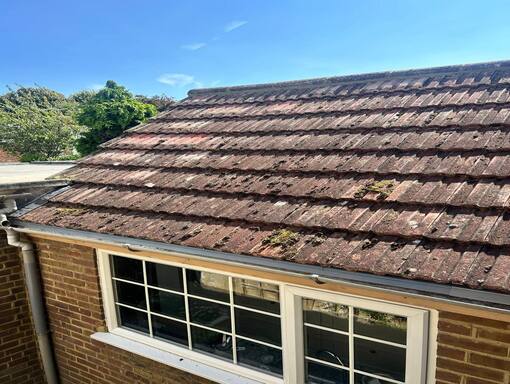
An older roof does not automatically need to be replaced. Roofing materials age at different rates, and a well-maintained roof may remain serviceable long after isolated components begin to show wear.
The correct decision depends on the condition of the complete roofing system rather than age alone. For property owners in Costessey, Norfolk, a professional inspection can establish whether targeted repairs are sufficient or whether deterioration has become too widespread for localised work to provide a dependable solution.
How to Decide Whether an Old Roof Can Still Be Repaired
A roof is made up of several connected components, including tiles or slates, underlay, battens, flashing, valleys, fixings and structural timbers. Some of these materials may remain sound even when others require attention.
A roofer should therefore assess how the roof is performing as a complete system. A small leak or a few damaged tiles may be repairable, while recurring defects across several areas can suggest more general deterioration.
Age Is Only One Factor
The age of a roof provides useful context, but it does not reveal its condition on its own. The lifespan of a roofing system is influenced by:
- The type and quality of its materials
- The standard of the original installation
- Exposure to wind and rain
- Previous maintenance and repairs
- Roof pitch and drainage
- Ventilation within the roof space
- The condition of fixings and supporting materials
Two roofs of a similar age can therefore require very different solutions.
Localised Defects May Be Repairable
If most of the roof remains secure and weather-resistant, an isolated defect can often be repaired without replacing the complete covering.
Examples of potentially localised problems include:
- A limited number of cracked or slipped tiles
- A small area of damaged flashing
- A blocked or defective valley
- Localised ridge or verge deterioration
- A minor flat roof split
- Damage confined to one roof junction
The surrounding materials must be strong enough to support the repair. Replacing one component will have limited value if the battens, underlay or adjoining coverings are already failing.
The Condition of the Underlay Matters
The underlay beneath tiles or slates provides secondary protection from wind-driven rain. It can become brittle, torn or damaged around fixings as it ages.
Because most of the underlay is concealed, its condition may not be obvious from outside. Warning signs can include debris in the loft, daylight beneath the covering or dampness appearing in more than one location.
An old roof with sound underlay may remain suitable for repairs. Widespread underlay failure can make localised work increasingly difficult.
Battens and Fixings Must Remain Sound
Tiles and slates depend on battens, nails, clips and other fixings for support. If these components have deteriorated, replacing individual coverings may not provide a secure result.
Repeatedly slipping tiles can indicate weakened fixings or decayed battens rather than damage to the tiles themselves. The underlying cause must be identified before deciding whether a repair will be effective.
Recurring Leaks Require a Wider Assessment
One isolated leak does not necessarily mean that the roof has reached the end of its useful life. However, leaks that return or appear in different places deserve a more comprehensive inspection.
Water can travel beneath roofing materials before becoming visible indoors, so several damp patches may originate from one defect. Alternatively, they may indicate that multiple areas are deteriorating simultaneously.
Understanding the pattern of water ingress is essential before deciding between repair and replacement.
Widespread Material Deterioration Changes the Decision
Repairs become less practical when tiles or slates are failing across several roof slopes. Surface coverings may become porous, brittle, cracked or difficult to secure.
Deterioration affecting flashing, mortar, underlay and battens at the same time can also reduce the value of repeated patching. Repairing one area may simply be followed by another defect nearby.
In these circumstances, replacement may provide a more coherent solution, but the decision should still be based on evidence from a complete inspection.
Structural Movement Needs Careful Investigation
A sagging or uneven roofline can indicate movement within the supporting structure. Causes may include weakened timbers, prolonged moisture exposure or changes in the loads placed on the roof.
Surface repairs will not correct a structural problem. The cause and extent of the movement must be established before an appropriate course of work can be recommended.
Not every uneven roof requires complete replacement, but it should never be assessed solely from ground level.
Previous Repairs Can Reveal Useful Information
A history of occasional repairs is normal for many older roofs. Problems arise when repairs are required with increasing frequency or when several patched areas are beginning to fail.
Reviewing previous work can help determine whether the defects were unrelated or part of a broader pattern. A roof that has remained dependable after well-executed repairs may still be worth preserving.
Signs That Repairs May Still Be Suitable
An older roof may remain a good candidate for repair when:
- Damage is confined to a clearly defined area
- Most tiles or slates remain secure
- The roofline is stable
- Battens and underlay are serviceable
- Leaks have an identifiable local cause
- Previous repairs remain sound
- Surrounding materials can support new work
These conditions allow targeted repairs to integrate effectively with the existing roof.
Signs That Replacement May Need Consideration
A broader solution may be appropriate when:
- Defects are appearing across several slopes
- Leaks continue from multiple locations
- Tiles or slates are widely deteriorated
- Underlay and battens are failing
- The supporting structure has been affected
- New repairs cannot connect securely to surrounding materials
- Patching is no longer providing reliable protection
No single sign confirms that replacement is necessary. The overall pattern and severity of deterioration should guide the decision.
Why a Professional Roof Inspection Is Important
The visible surface tells only part of the story. A professional assessment should examine the roof covering, fixings, flashing, valleys, ridge details, drainage and accessible internal structure.
This allows the roofer to separate cosmetic ageing from functional failure. It also helps avoid unnecessary replacement when focused repairs can still restore reliable performance.
Conclusion
An old roof does not always need to be completely replaced. If the main structure and surrounding materials remain sound, carefully planned repairs may extend its useful service life. Replacement becomes more relevant when deterioration is widespread, recurring or affecting several layers of the roofing system.
Costessey Roofing Services can inspect your roof, identify the extent of any deterioration and explain whether repair or more comprehensive work is appropriate. If you are concerned about an ageing roof, contact our team to arrange a professional assessment in Costessey, Norfolk.
Call us on: 01362 702 197
Click here to find out more about Costessey Roofing Services
Click here to complete our contact form and see how we can help with your roofing needs.